
Foundation Damage Prevention in Sartell, MN
A damp basement, cracked foundation wall, or settling concrete patio is rarely a problem that begins in the ground—it almost always begins 20 feet up at your roofline. Over a single storm, thousands of gallons of rainwater cascading off an uncontrolled roof saturate the soil surrounding your basement walls, generating massive hydrostatic pressure. DualGuard Gutter Systems designs complete roof-to-discharge water management systems across Sartell, St. Cloud, and Stearns County to protect your home's foundation.
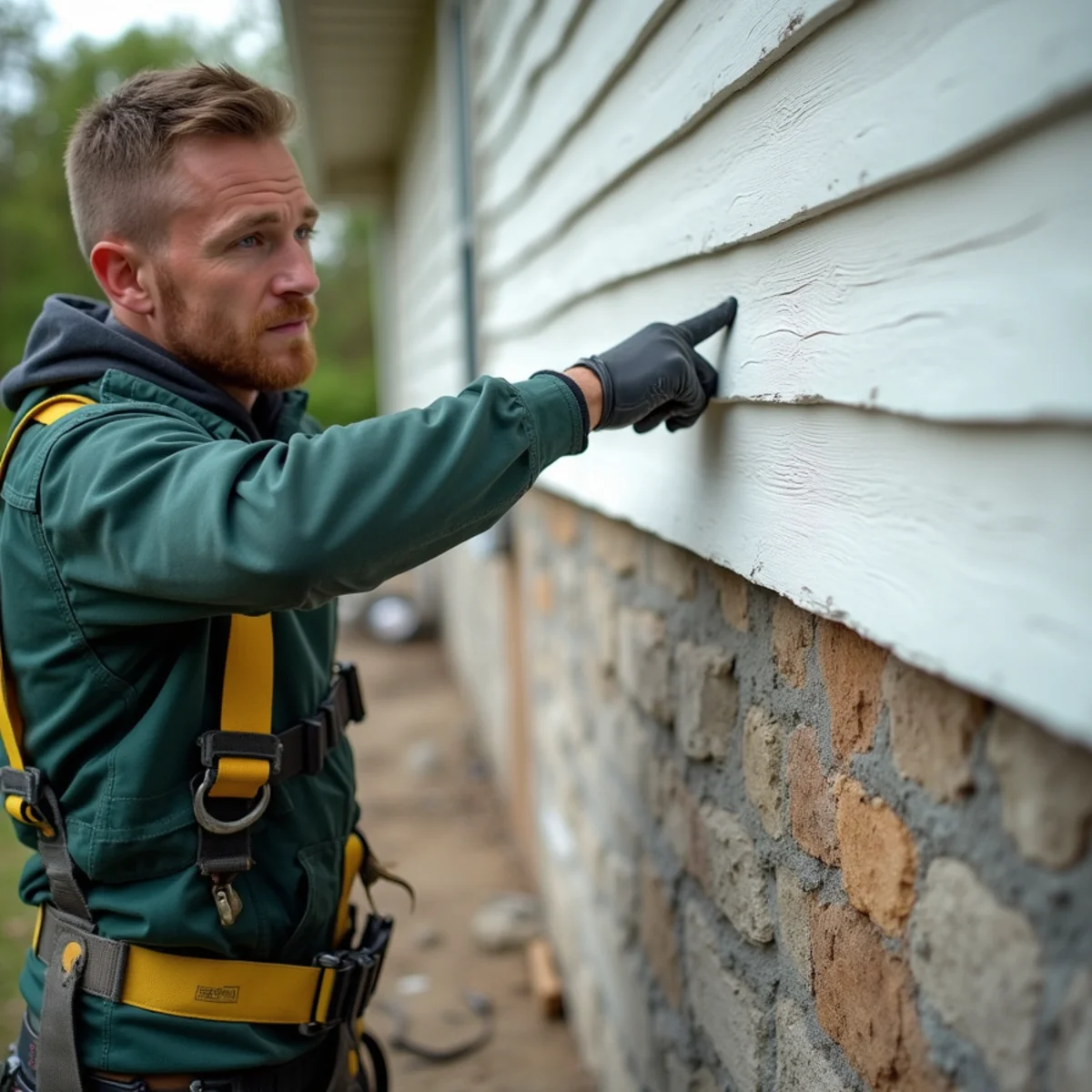
The Mechanics of Hydrostatic Pressure on Central Minnesota Basements
A 1-inch rainfall on an average 2,000-square-foot roof yields 1,250 gallons of water. When unmanaged, this entire volume pours straight off the eaves into the loose backfilled soil surrounding your basement. In Stearns and Benton counties, dense clay subsoils expand dramatically as they absorb water. This swelling exerts immense lateral pressure—known as hydrostatic pressure—against concrete block and poured foundation walls. Over multiple seasonal cycles, this hydraulic force pushes basement walls inward, shearing mortar joints and allowing groundwater to flood finished basements.
- Horizontal and stair-step cracking along subterranean concrete block mortar joints
- Inward bowing, lateral shear deflection, and structural compromise of subterranean basement walls
- Chronic water seepage through floor-to-wall cold joints, tie-rod holes, and hairline cracks
- Damp musty odors, ruined basement carpets, warped baseboards, drywall rot, and hazardous mold
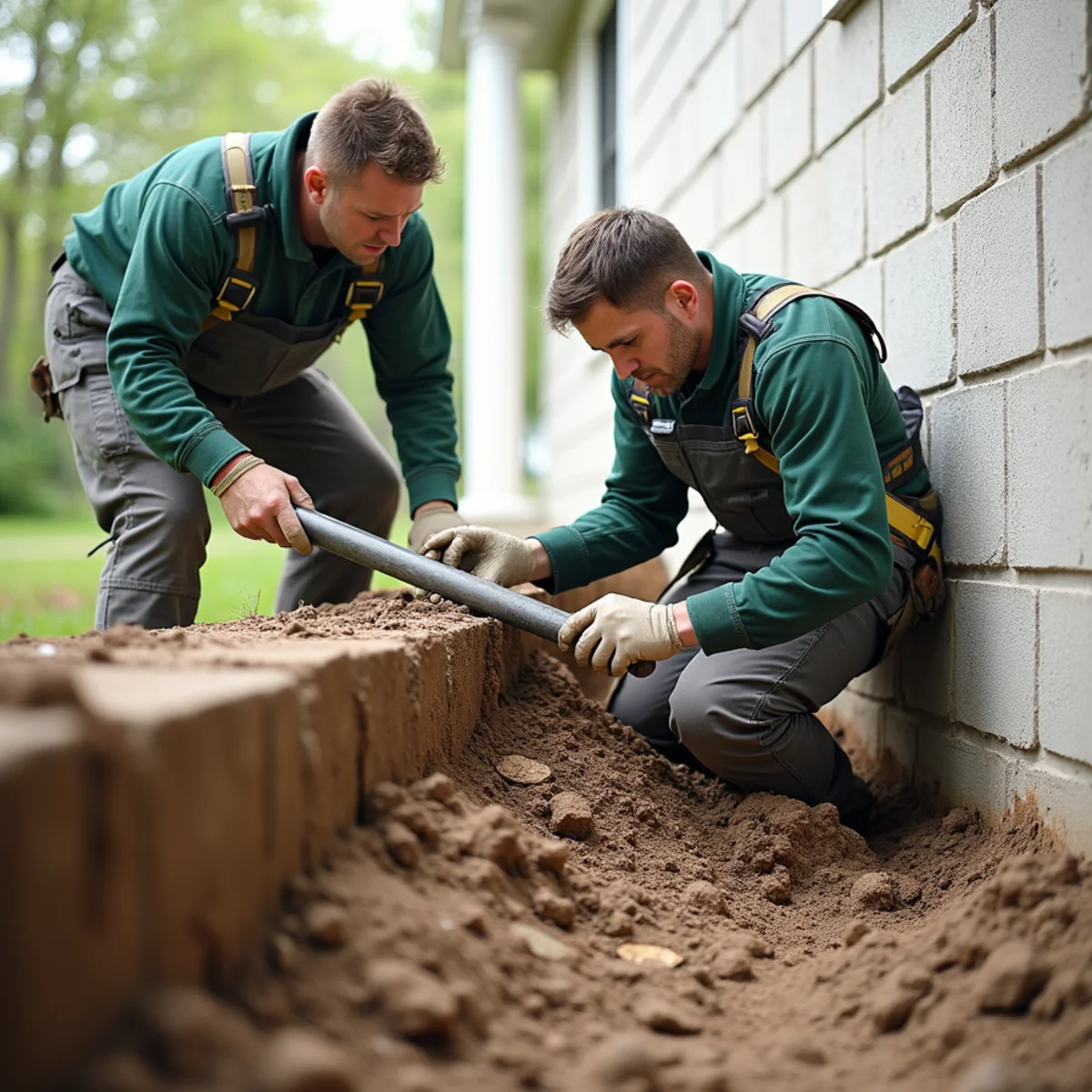
Soil Erosion, Sub-Base Washout & Frost Heave Mechanics
While dense clay soils expand and bow subterranean walls, sandy outwash soils—common across Sherburne, Benton, and parts of Stearns County—react differently. Concentrated downspout discharge scours deep trenches into sandy soil, washing away the compacted sub-base beneath concrete driveways, garage aprons, and front porches. In winter, saturated soil surrounding foundations freezes down to Minnesota's 42-to-60-inch frost line. Ice expands by 9% in volume, exerting upward frost-heave pressure that lifts footings, cracks basement slabs, and throws interior door frames out of plumb.
- Sub-base cavitation and aggregate washout beneath poured concrete walkways, steps, and patios
- Sunken concrete slabs creating hazardous trip points and negative pitch toward basement windows
- Perimeter landscape grading erosion channeling subsequent surface runoff directly against walls
- Severe winter frost-heaving of footings and foundation slabs caused by saturated soil freezes
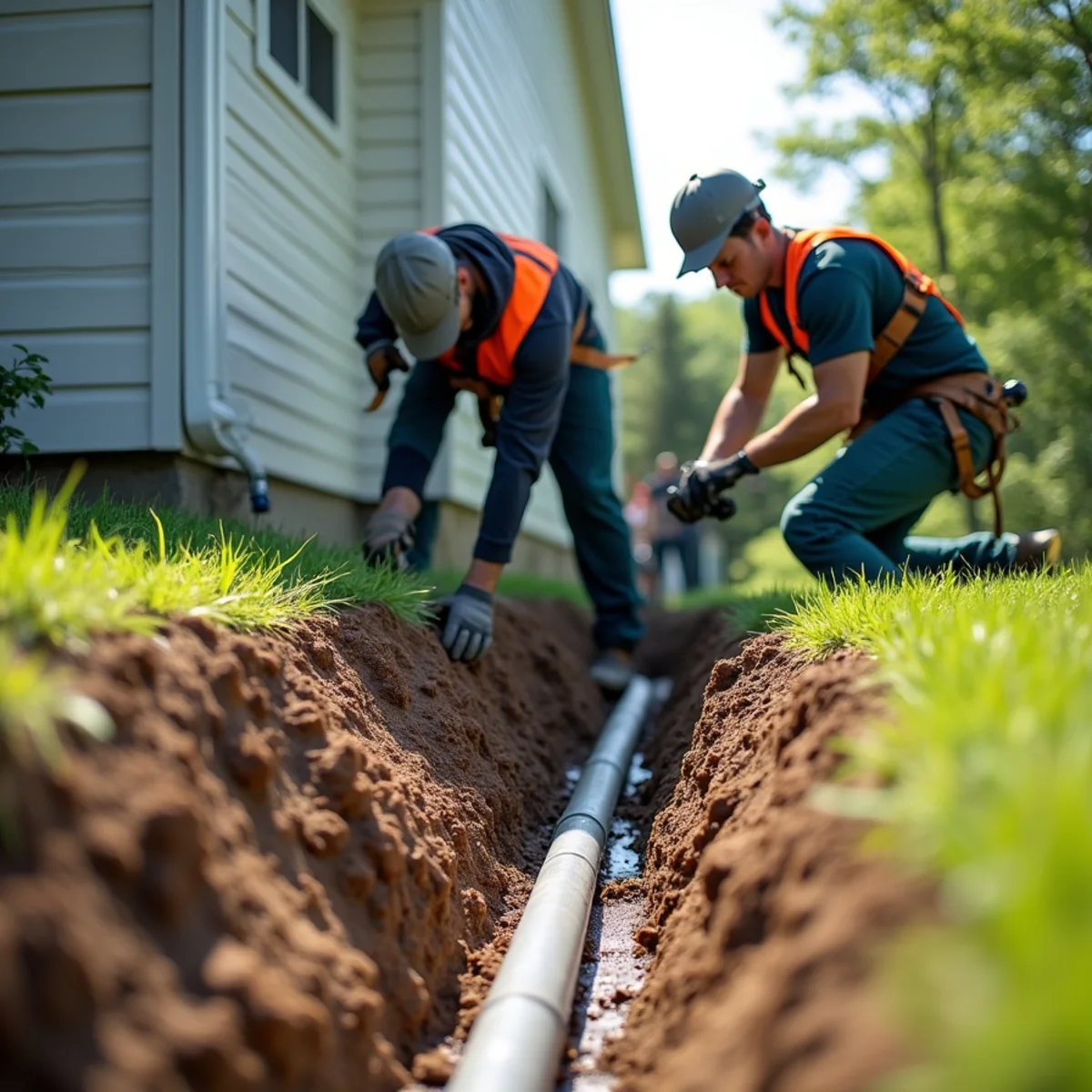
DualGuard's 5-Step Roof-to-Discharge Foundation Defense Protocol
DualGuard Gutter Systems engineers exterior water diversion as an integrated hydraulic defense system, neutralizing water intrusion before moisture ever reaches subterranean concrete.
- Step 1: Roof Catchment Calculation & Grading Audit — We calculate total roof square footage and eave pitch to determine peak rainfall gallons per minute, inspecting perimeter yard fall with laser levels.
- Step 2: High-Capacity Seamless Gutter Sizing — We roll-form continuous .032 aluminum gutters sized (5-inch or 6-inch) to capture 100% of roof runoff without spilling over the front lip during torrential downpours.
- Step 3: High-Flow Downspout Positioning — We install oversized 3x4 aluminum downspouts configured at strategic building corners to distribute water volume evenly away from high-risk basement walls.
- Step 4: Subsurface Rigid PVC Drainage Routing — Downspouts connect into smooth-bore SDR-35 PVC pipe sloped at a minimum 1/8-inch per foot, trenching water 10 to 25+ feet away from the home's backfill zone.
- Step 5: Freeze-Proof Pop-Up Discharge Calibration — Drainage lines terminate at green pop-up relief emitters with gravel seepage dry wells, ensuring continuous flow even during freezing late-autumn storms.

Exterior Water Diversion vs. Costly Interior Waterproofing
When homeowners notice basement moisture, waterproofing contractors frequently propose interior drain tile systems and sump pumps costing between $12,000 and $28,000. While interior drain tile removes water after it enters the home, it does nothing to alleviate the immense exterior hydrostatic pressure bowing your foundation walls. Exterior roof runoff diversion through seamless gutters and buried downspout extensions eliminates water at the source for a fraction of the cost—typically between $1,800 and $4,500 for a comprehensive whole-home system.
- DualGuard exterior roof diversion: $1,800 to $4,500 for complete gutters and extended drainage
- Interior basement drain tile & sump excavation: $12,000 to $28,000 plus finished basement demolition
- Eliminates hydrostatic pressure against exterior walls rather than pumping water after it enters
- Protects landscaping, concrete flatwork, and structural wall integrity from irreversible settlement
Minnesota Residential Code & Perimeter Surface Drainage Mandates
Surface drainage around residential foundations is strictly regulated under the Minnesota Residential Code (MR 1309) and IRC Section R401.3. State code requires ground immediately adjacent to foundation walls to fall a minimum of 6 inches within the first 10 feet. When downspouts dump roof runoff within 3 to 5 feet of the house, they violate the intent of perimeter drainage code and create localized saturated swales that destroy positive slope. DualGuard installs code-compliant drainage extensions that discharge water safely beyond the 10-foot boundary.
- Full compliance with Minnesota Residential Code Chapter 1309 / IRC Section R401.3 grading standards
- Discharges roof catchment volume past the critical 10-foot foundation backfill settlement zone
- Prevents stormwater discharge from washing out neighboring property lines or municipal sidewalks
- Call (321) 485-9911 to schedule an on-site foundation drainage assessment and laser grade audit
Why Central Minnesota Homeowners Trust DualGuard for Foundation Protection
DualGuard Gutter Systems brings specialized exterior water management expertise to Central Minnesota properties. We do not just hang gutters; we design complete hydrological diversion networks tailored to Stearns, Benton, and surrounding county soil profiles. Every installation features heavy-duty .032 seamless aluminum, internal hidden screw hangers driven into solid framing, commercial downspout drops, and an unconditional 5-year workmanship guarantee.
- Locally owned and operated out of Sartell, MN, with deep expertise in regional freeze-thaw cycles
- Heavy-gauge .032 seamless aluminum custom roll-formed on-site for zero seam leak vulnerability
- Complete turnkey water diversion combining roofline gutters with underground PVC drainage runs
- Immediate dispatch and phone consultation available 24/7 by calling (321) 485-9911
Related Foundation Damage Prevention Services
Central Minnesota Service Coverage
Trusted by Homeowners Across Central Minnesota
Foundation Damage Prevention FAQs
How do gutters prevent basement flooding and foundation cracks?
Gutters capture thousands of gallons of roof runoff and route it far away from your foundation. Without gutters, that massive volume drops directly into the loose backfill soil against your basement walls. Saturated soil creates hydrostatic pressure that pushes water through basement concrete joints and causes foundation walls to bow and crack.
What is hydrostatic pressure and how do downspouts create it?
Hydrostatic pressure is the lateral force exerted by standing water trapped in saturated soil. When downspouts dump roof water directly beside your house, the trapped water pushes inward against basement walls with thousands of pounds of pressure, forcing moisture through pores and cracks in concrete block.
How far should downspout water be discharged away from basement walls?
Roof runoff should be discharged a minimum of 6 to 10 feet away from your foundation—and even further if the yard has a gentle slope back toward the house. DualGuard installs buried PVC drainage lines that carry water 10 to 25+ feet away to discharge safely onto lawns or swales.
Can improper gutters void a foundation or basement waterproofing warranty?
Yes! Virtually all foundation repair and basement waterproofing warranties contain strict clauses requiring functional gutters and downspout extensions discharging water away from the foundation. Failing to maintain gutters can completely void expensive waterproofing warranties.
Why is exterior gutter water diversion better than interior sump pump systems?
Interior sump pumps and drain tile only manage water after it has already penetrated your basement walls, doing nothing to relieve the immense lateral hydrostatic pressure bowing exterior concrete. Exterior seamless gutters and extended drainage stop water before it reaches the foundation, protecting the structural integrity of your home for a fraction of the cost.