
Downspout Extensions & Underground Drainage in Sartell, MN
Collecting roof runoff is only half the battle—if downspouts discharge directly beside your foundation walls, that water pools into backfilled soil, creates massive hydrostatic pressure, and penetrates your basement slab. DualGuard Gutter Systems engineers customized downspout extensions and buried underground drainage lines with freeze-resistant pop-up emitters across Sartell, St. Cloud, and Central Minnesota to discharge water 10+ feet away safely.

The Dangers of Short Downspout Discharge in Central Minnesota
A 1-inch rainfall on a 2,000-square-foot roof yields approximately 1,250 gallons of water. When standard 3-foot downspout elbows dump this deluge right at your home's perimeter, the saturated soil expands against your basement footings. In Stearns and Benton counties, heavy clay subsoils hold water against foundation walls, causing hairline cracks, damp basements, and efflorescence. In Sherburne County's sandy soils, concentrated discharge washes away landscaping mulch and excavates deep erosion chasms.
- Hydrostatic pressure cracking concrete block and poured basement walls
- Basement seepage, damp odors, ruined sheetrock, and black mold colonization
- Foundation perimeter settling and uneven concrete sidewalk sinking
- Landscape bed erosion and root exposure on expensive ornamental shrubbery
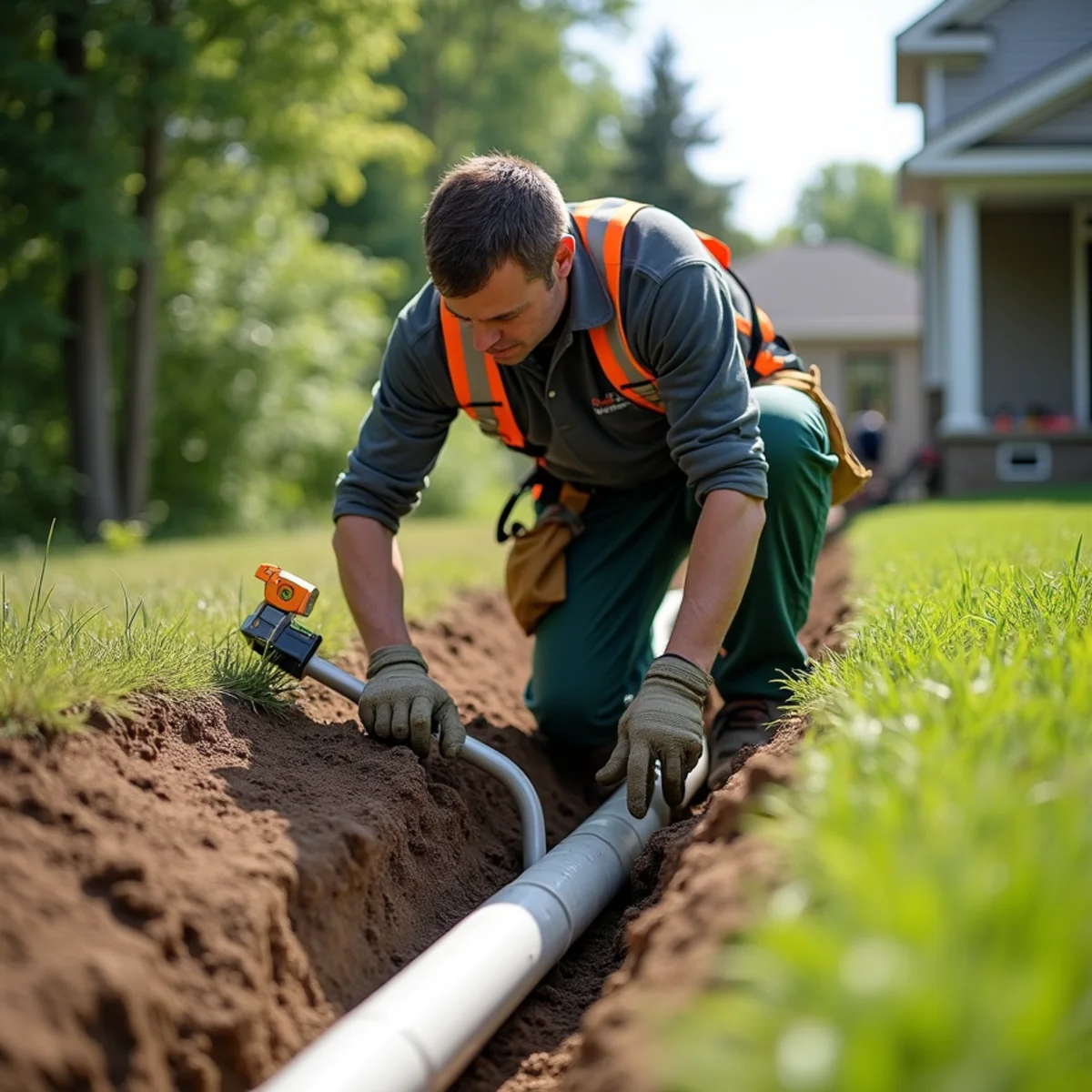
Underground Buried PVC Drainage & Freeze-Resistant Pop-Up Emitters
For a clean aesthetic that eliminates unsightly above-ground trip hazards, DualGuard installs buried underground drainage systems. We trench smooth-wall rigid PVC pipe sloping downhill to a spring-loaded pop-up emitter flush with your turf. During heavy rainfall, hydrostatic water pressure pushes the emitter lid up to release water harmlessly across the lawn; once flow ceases, the lid snaps shut to block debris, grass clippings, and rodents.
- Heavy-duty smooth-wall PVC piping providing superior flow without corrugated ridges that catch silt
- Spring-loaded pop-up emitters that sit flush with the turf for seamless lawn mowing
- Gravel dry-well bedding beneath emitter discharge points to drain residual water and prevent winter freezing
- In-line cleanout access points allowing easy seasonal pressure flushing and camera scoping
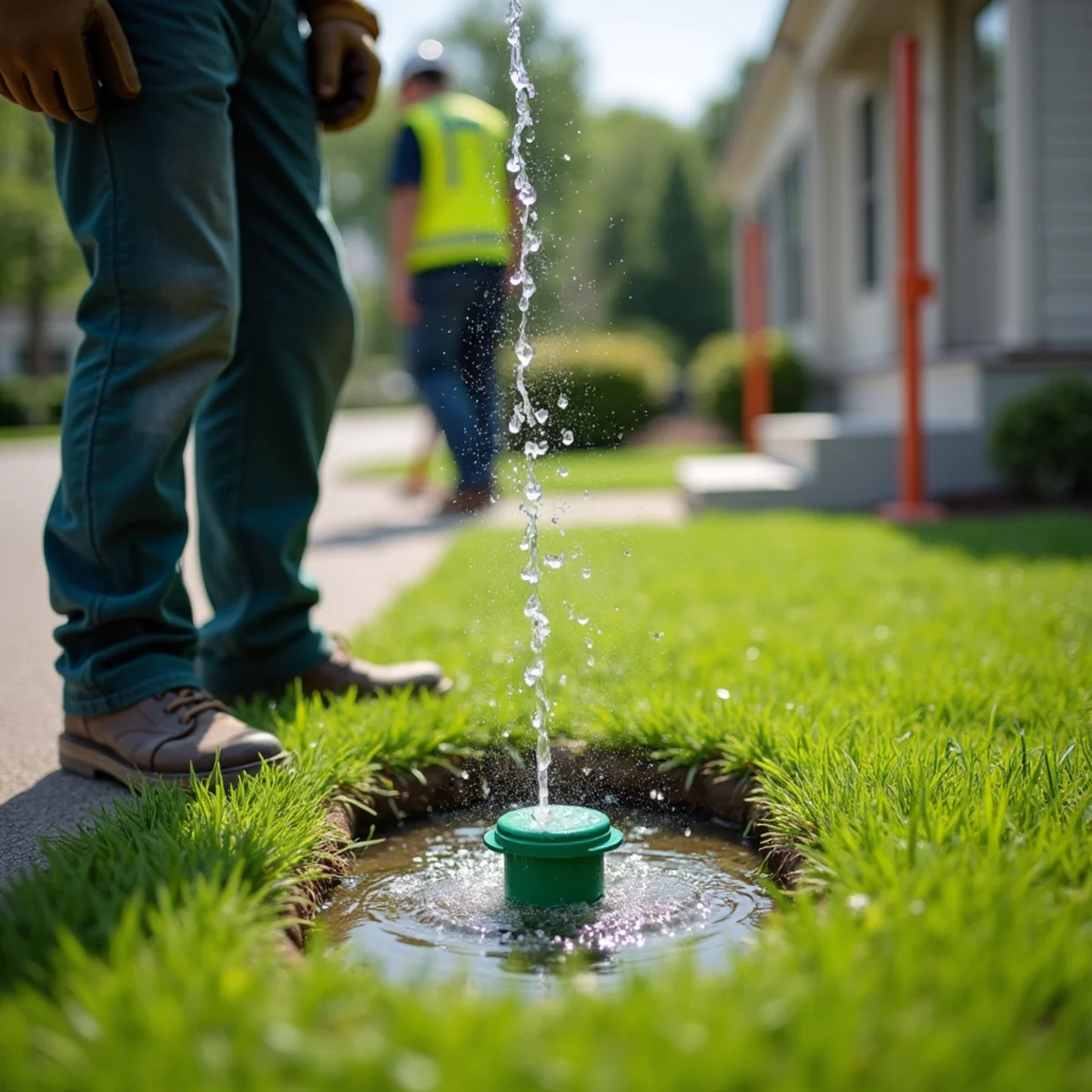
Our 5-Step Drainage Trenching & Downspout Routing Protocol
DualGuard Gutter Systems follows an engineered drainage installation process to ensure long-term, freeze-resistant subterranean water evacuation away from your foundation footings.
- Step 1: Topographic Slope & Utility Survey — We locate underground utility lines via Gopher State One Call (811) and use digital transit levels to establish positive downhill gravity slope.
- Step 2: Precision Trenching & Sod Preservation — We carefully slice and peel turf sod to minimize lawn disruption before excavating trenches with a minimum 1% downward slope (1 inch drop per 8 feet).
- Step 3: Rigid PVC Pipe Assembly — We install smooth-wall SDR-35 rigid PVC pipe with solvent-welded leak-proof fittings, avoiding cheap corrugated pipe that crushes and traps silt.
- Step 4: Dry-Well Sump & Emitter Bedding — At the discharge point, we excavate an anti-freeze gravel dry well bedded with washed river rock, installing an NDS spring-loaded green pop-up emitter.
- Step 5: Backfill, Compaction & Turf Restoration — Trenches are backfilled, mechanically tamped to prevent trench settling, and existing sod is re-laid seamlessly for an invisible footprint.
Downspout Extension Costs vs The Cost of Foundation Remediation
Installing professional downspout extension systems is the highest-ROI investment a homeowner can make to protect structural integrity. Professional above-ground aluminum hinged flip-up extensions typically cost $65 to $120 per downspout, while buried underground smooth-wall PVC drainage runs range from $450 to $950 per downspout depending on linear footage and trenching obstacles. By contrast, foundation waterproofing, concrete mudjacking, and structural piering cost between $5,000 and $25,000.
- Above-ground hinged extensions: $65 to $120 per downspout drop for quick, lawn-friendly protection
- Underground buried PVC drainage: $450 to $950 per line for permanent, invisible water diversion
- Prevents thousands of dollars in basement foundation bowing, cracked slabs, and interior waterproofing
- Clear written estimates with guaranteed pricing valid for 30 days
Minnesota Stormwater Regulations & Municipal Setback Standards
Residential stormwater runoff is subject to Minnesota municipal property maintenance codes and local watershed district guidelines. Discharge points must terminate at least 5 to 10 feet from property boundaries to prevent nuisance runoff onto adjacent lots, and downspout discharge must never cross public sidewalks where it creates winter ice liability. DualGuard engineers every drainage layout to comply with Sartell, St. Cloud, and Stearns County stormwater best practices.
- Strict adherence to municipal property boundary setbacks for stormwater discharge
- Prohibition of discharge onto public sidewalks to eliminate winter slip-and-fall liability
- Protection of municipal storm sewer inlets by preventing silt runoff and erosion
- Design layouts that maximize lawn absorption while protecting structural foundations
Why Sartell & Stearns County Homeowners Choose DualGuard
DualGuard Gutter Systems is centrally located at 305 4th Ave S Ste 9 in Sartell. Unlike general landscapers who bury cheap corrugated tubing that collapses, or gutter companies that simply slap on 3-foot aluminum elbows, DualGuard provides comprehensive roof-to-discharge engineering. We pair our seamless .032 roll-formed gutters with heavy-duty drainage systems built for Minnesota freeze-thaw durability.
- Comprehensive roof-to-ground water management by local Stearns County craftsmen
- Smooth-wall rigid PVC pipe construction engineered to resist Minnesota ground freeze heaves
- Licensed, bonded, and comprehensively insured for complete homeowner protection
- Call our Sartell office directly at (321) 485-9911 for an on-site drainage consultation
Related Seamless Gutter Installation Options
Serving Central Minnesota Communities
Trusted by Homeowners Across Central Minnesota
Downspouts & Underground Drainage FAQs
How far should a downspout discharge from my foundation?
In Central Minnesota, roof water should be discharged a minimum of 6 to 10 feet away from basement foundation walls—and ideally even further if the surrounding yard has a mild slope toward the house. Discharging water closer than 6 feet significantly increases the risk of basement seepage and foundation cracking.
Do buried downspouts freeze in Minnesota winters?
Properly engineered underground downspout lines will not freeze up solid. DualGuard installs smooth-wall PVC with a continuous downward pitch and places a perforated drainage sump and gravel dry well at the lowest elbow. This allows all standing water to drain into the subsoil below the pipe, preventing ice dams inside the buried line.
Can you add a downspout to an existing gutter run?
Yes. If you have an unusually long gutter run (over 40 feet) that frequently overflows in heavy rains, we can cut a new precision drop outlet, install an additional downspout, and route it to an appropriate discharge area to balance the hydraulic load.
Do you install rain barrels or collection diverters?
Yes. We install automatic rain barrel diverters that channel clean rainwater into your garden collection barrels during summer storms, and automatically bypass overflow back through the downspout system once barrels are full.
Why is smooth-wall rigid PVC better than corrugated black pipe?
Corrugated black pipe has internal ridges that trap decomposing leaves, roof shingle grit, and silt, which eventually turns into an impenetrable clog. Furthermore, corrugated pipe easily crushes under lawn mower traffic or freeze-thaw soil expansion. Smooth-wall rigid PVC maintains maximum water velocity, resists crushing, and can be mechanically cleaned with plumbing snakes.